No products in the cart.
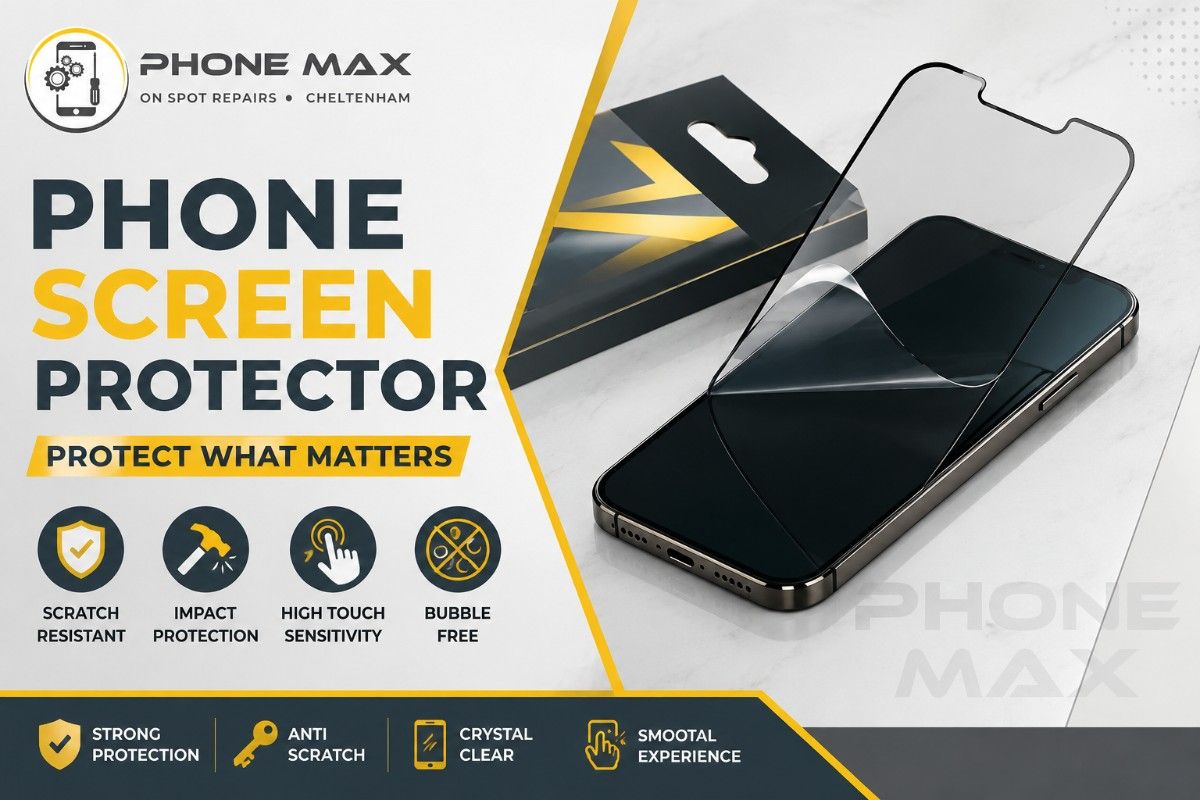
Phone Screen Protector: Types, Benefits & Fitting Tips
Watched a hairline crack creep across a screen after nothing more than a small knock in a pocket? Happens more than people think. A decent phone screen protector takes that hit instead of your actual display, and it’s the difference between a 5-minute fix and a much bigger headache later. I’ve fitted more of these than I can count at our shop on the High Street, and the same question comes up almost daily: which type actually works, and how do you fit one without trapping air underneath it?
So here’s the honest breakdown. Types of protector, how privacy glass compares to standard tempered glass, the fitting process step by step, and which option makes sense for phones like the iPhone 17 Pro, the Samsung S25, an iPhone 13 Pro Max, or a Motorola handset. Doesn’t matter if you’re in Cheltenham, Gloucester, Tewkesbury, or Bishop’s Cleeve; the advice holds either way, and I’ve thrown in a couple of real examples from customers we’ve dealt with locally.
What a Phone Screen Protector Actually Does
A phone screen protector is a thin transparent layer that sits on top of your display and takes the daily punishment that would otherwise go straight into the glass underneath. Scrapes, drops, pocket grit, all of it hits the protector first.
People assume their screen is tough enough without one. It isn’t, not really. Even displays using Corning Gorilla Glass pick up fine surface scratches from keys and sand within weeks of normal use. A phone screen cover catches that instead, so when it eventually wears out, you swap the cover, not the screen.
Real example: Had a customer last month who was convinced her screen needed to be replaced outright. It was just a badly scratched protector doing exactly the job it was built for. That one detail saved her a repair bill she didn’t need to pay.
Types of Screen Protector for Phone Screens
Material changes everything about how a protector performs, so here’s a quick comparison before you buy anything.
Note: In a screen protector description, the letter “H” stands for pencil hardness. When you see a rating like 9H, it means the surface can resist scratches from a 9H grade drawing pencil, the hard scale limit used in standard manufacturing tests, rather than a mineral rating on the Mohs scale.
| Type | Best For | Durability | Feel |
| Tempered glass screen protector | Drop and scratch protection | High, 9H hardness | Closest to bare screen |
| PET film | Budget protection, thin fit | Lower | Slightly softer |
| TPU film | Curved edge phones | Medium, some self-healing | Rubbery texture |
| Privacy screen protector | Blocking side angle view | High | Slightly dimmer |
| Matte or anti-glare | Cutting glare, fingerprints | Medium to high | Textured |
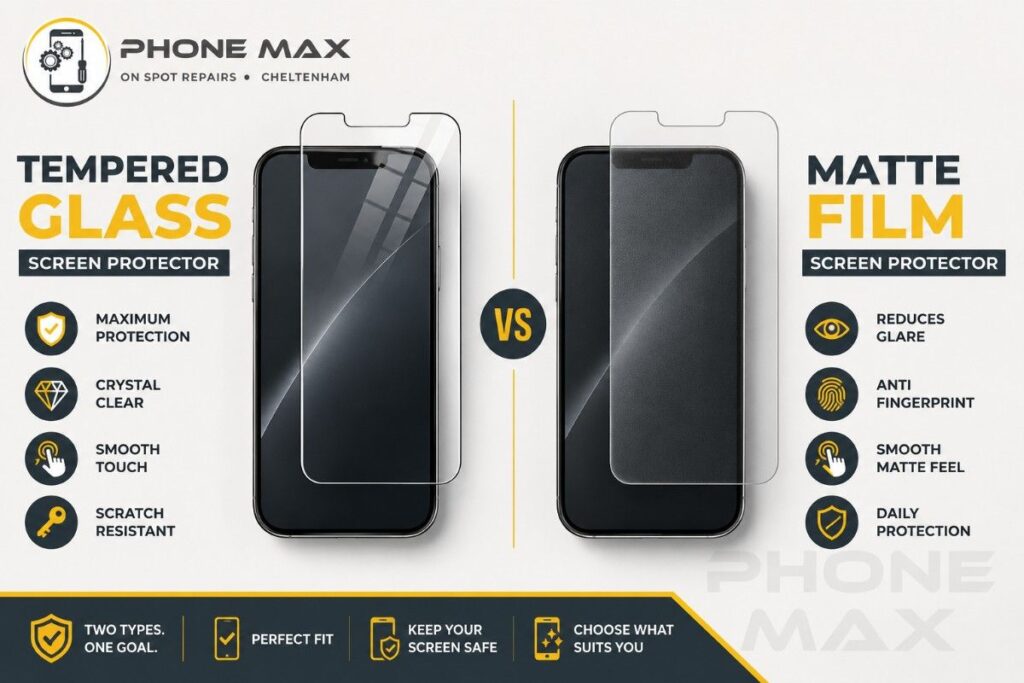
Tempered glass stays the most popular choice, and it earns that. The glass gets treated under heat to build a hard outer layer over a more flexible core, so it absorbs an impact rather than passing the crack straight through to your screen. Same reason most black screen protector boxes carry that 9H rating printed on the front.
Best Protective Screen for iPhone Models
Newer phones like the iPhone 17 Pro need a privacy screen protector or standard tempered glass cut precisely around the camera and Face ID sensors, since Apple’s flat front display already runs Ceramic Shield as standard. Older handsets, an iPhone 12 screen protector or an iPhone 13 Pro Max cover, tend to be far more forgiving on fit. Gentler curves, more off-the-shelf options.
Always test against your case before committing to an iPhone screen protector. A protector that’s even a millimetre too wide will lift at the corners and start collecting dust within days, and there’s nothing worse than that grubby line building up under the glass.
Screen Guard Options for Samsung and Motorola
A Samsung S25 screen protector and the older screen guard Samsung ranges both benefit from privacy screen protector benefits if you’re often on public transport or working in a shared office. A phone screen protector motorola owner needs tends to be simpler sourcing, since most Motorola models keep flatter glass with fewer curves to navigate.
Worth flagging if you’ve got the newer Galaxy S26 Ultra though. Samsung built privacy protection straight into the hardware on that model, using pixel level light control to narrow the viewing angle from the side, rather than relying on a stick-on filter. It can be switched on for the whole screen or just for notifications, straight from the display settings. If you own a Samsung S26 Ultra, you may not need a separate privacy screen protector at all, just a standard tempered glass one for drop protection, since the privacy side is already handled. Full setup steps are on Samsung’s support page if you want to turn it on.
Privacy Screen Protector Benefits Worth Knowing
A privacy screen protector uses a microlouvre film that narrows the viewing angle right down, so anyone next to you on the train only sees a dark screen. Only someone looking straight on gets a clear picture.
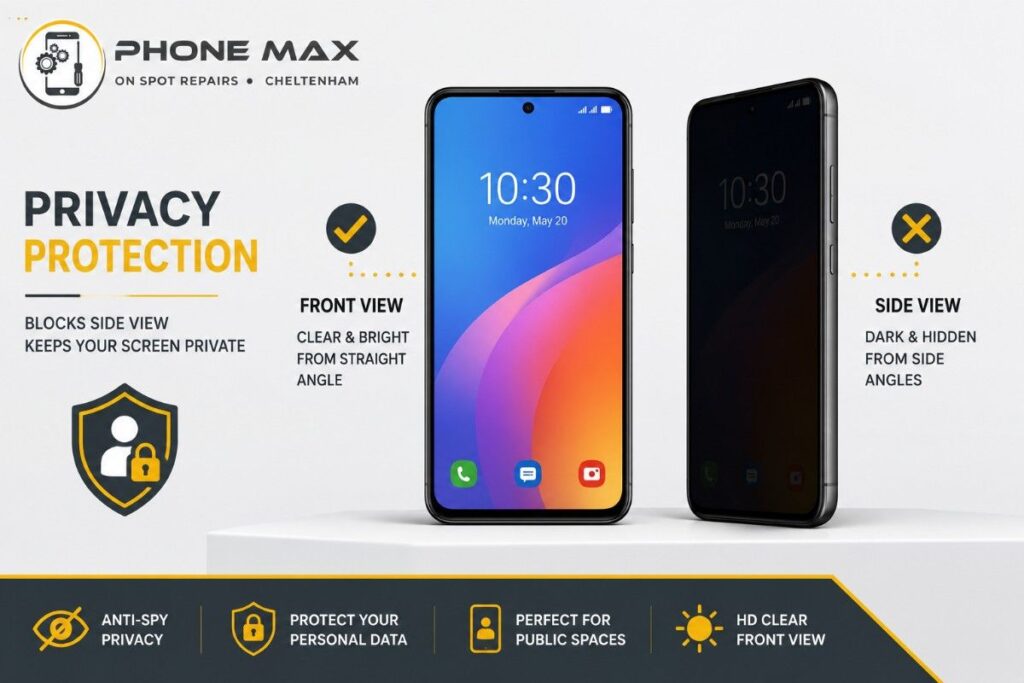
Real example: A customer from Gloucester mentioned she kept noticing people glancing at her phone during her morning commute. Fitted a privacy protector for her, and she said it changed how she used her phone in public completely. Small fix, genuinely noticeable difference.
There’s a trade-off. The screen dims slightly when viewed head-on, since that microlouvre film blocks some light by design. Most people stop noticing it within a day or two.
How Do I Put On a Screen Protector Without Bubbles
Comes down to patience more than skill, honestly. Here’s what I walk every customer through:
- Clean the screen properly with the wet wipe provided, then the dry cloth to catch any leftover dust.
- Use the dust removal sticker if one’s included. A single speck causes a visible bubble every time.
- Line it up using the camera cutout first, hovering a few millimetres above the glass before committing.
- Let one edge drop into place naturally rather than pressing the centre down first.
- Push air out toward the edges using a card or the squeegee tool, working from the centre outward.
- Give it a few minutes before touching the phone again. Some adhesives need that time to bond properly.
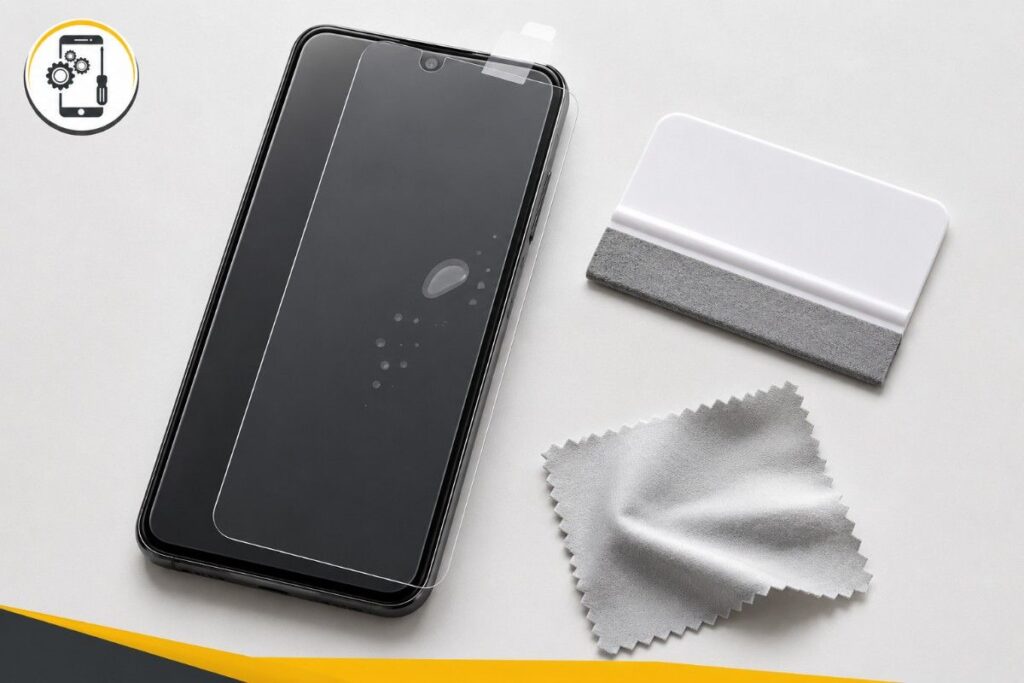
Most stubborn bubbles come from trapped dust, not a fault with the protector itself. If it keeps happening, fitting in store is usually less hassle than wasting a second protector at home, and that’s a service we run at Phone Max for anyone in the area.
Phone Case With Screen Protector Combos
Buying a phone case with screen protector included saves the guesswork of matching two products separately, and it usually means the case won’t lift the glass at the corners. Genuinely useful if you’ve struggled before to find a protective screen for phone models with curved edges, where mismatched combos peel within a week.
Already own a case you like? Check any new protector is labelled case-friendly first. That one detail decides whether the two sit flush or leave an ugly gap round the edge.
Fitting Service in Cheltenham
For anyone nearby who’d rather have this done the first time properly, our fitting service on the High Street takes a few minutes and includes dust-free application. We regularly see customers travelling in from Gloucester, Tewkesbury, and Bishop’s Cleeve wanting a phone screen protector S23 Ultra or iPhone 13 Pro Max fitted without the frustration of doing it themselves. Full details are on our services page, or just get in touch if you’d rather book ahead.
We also stock a decent range of cases and covers in our shop if you’re deciding between a cool screen protectors design or something plainer like a black screen protector for daily use.
Real examples: One customer brought his iPhone in after cracking his last protector on the pavement outside Boots. Fitted a new one in a few minutes, zero bubbles, and it’s held up well since, by his own account a few weeks later when he popped back in for a case. Another visitor from Tewkesbury said she’d tried fitting one herself twice and given up over bubbles, relieved the in-store option sorted it first attempt.
Conclusion
Comes down to how you actually use your phone. Drop protection matters most; tempered glass is the safer bet. Privacy in public spaces matters more; a microlouvre protector solves that specific problem well, and nothing else really does.
I tell customers the same thing every time: get it fitted properly once and you stop thinking about your screen for months. If you’re in Cheltenham or nearby and want it done right, our best phone repair shop in Cheltenham guide has more on what we offer, or just pop into the High Street.
And if it’s not just your phone screen giving you grief, our guide on laptops that won’t turn on covers the most common culprits, since we handle those repairs on the High Street too.
Frequently Asked Questions
Do I really need a screen guard for mobile use, or is my screen tough enough alone?
Even Ceramic Shield and Gorilla Glass scratch from everyday contact with keys, sand, and loose change. A screen guard for mobile devices takes that wear instead, and it keeps resale value higher too.
How long does a phone protector screen typically last?
Usually 6 to 12 months with normal use. Once fine scratches build up in the centre, or a chip appears near the edge, swap it.
Can a screen protector affect touch sensitivity?
Good tempered glass is designed to keep full touch response. Cheaper film sometimes feels slightly different, though it rarely affects actual sensitivity in practice.
Is tempered glass better than PET film day to day?
Tempered glass wins on scratch resistance and drop protection thanks to the higher hardness rating. PET film suits people after the thinnest possible fit or a very tight case.